A New Paint Job Won't Fix a Broken Engine.
Stop adding steps on top of unresolved mechanics. Diagnose, refine, and own how your body actually moves and connects.
Putting fresh paint on a car with no engine doesn't make it drive any better—it just gives you an expensive piece of metal sitting stuck in the driveway. Yet that is precisely how most advanced dance instruction operates.
Serious dancers eventually hit the same wall. You’ve learned patterns, collected figures, and can execute choreography under ideal studio conditions. But the second real pressure hits—a crowded floor, a different partner, or unexpected tempo changes—the movement feels heavy, fragile, and effortful. Adding more steps onto broken mechanics only hides the real issue under a deeper layer of stress.
This is where the quiet burnout sets in. You write another check for private lessons, sign up for another showcase or routine, and double down on practice—hoping that this next level will finally make the partnership feel easy. Instead, you end up carrying a double burden: the raw financial bleed of buying endless material and chasing marks from judges, and the emotional exhaustion of second-guessing yourself every time the music plays. You're working twice as hard, spending thousands more trying to satisfy an external score, and still fighting your own body. At that point, "advancing" is just a more expensive, exhausting way of staying stuck.
The Golden Rule of Real Technique
There is a foundational truth in classical dance development—most famously emphasized in the English technique tradition: a dancer must master their own posture, footwork, and leg swing before inflicting themselves on a partner. [1]
When you own your personal balance and mechanics first, connection ceases to be a struggle for control. Leading becomes effortless, following becomes responsive, and partnership finally feels like a natural conversation.
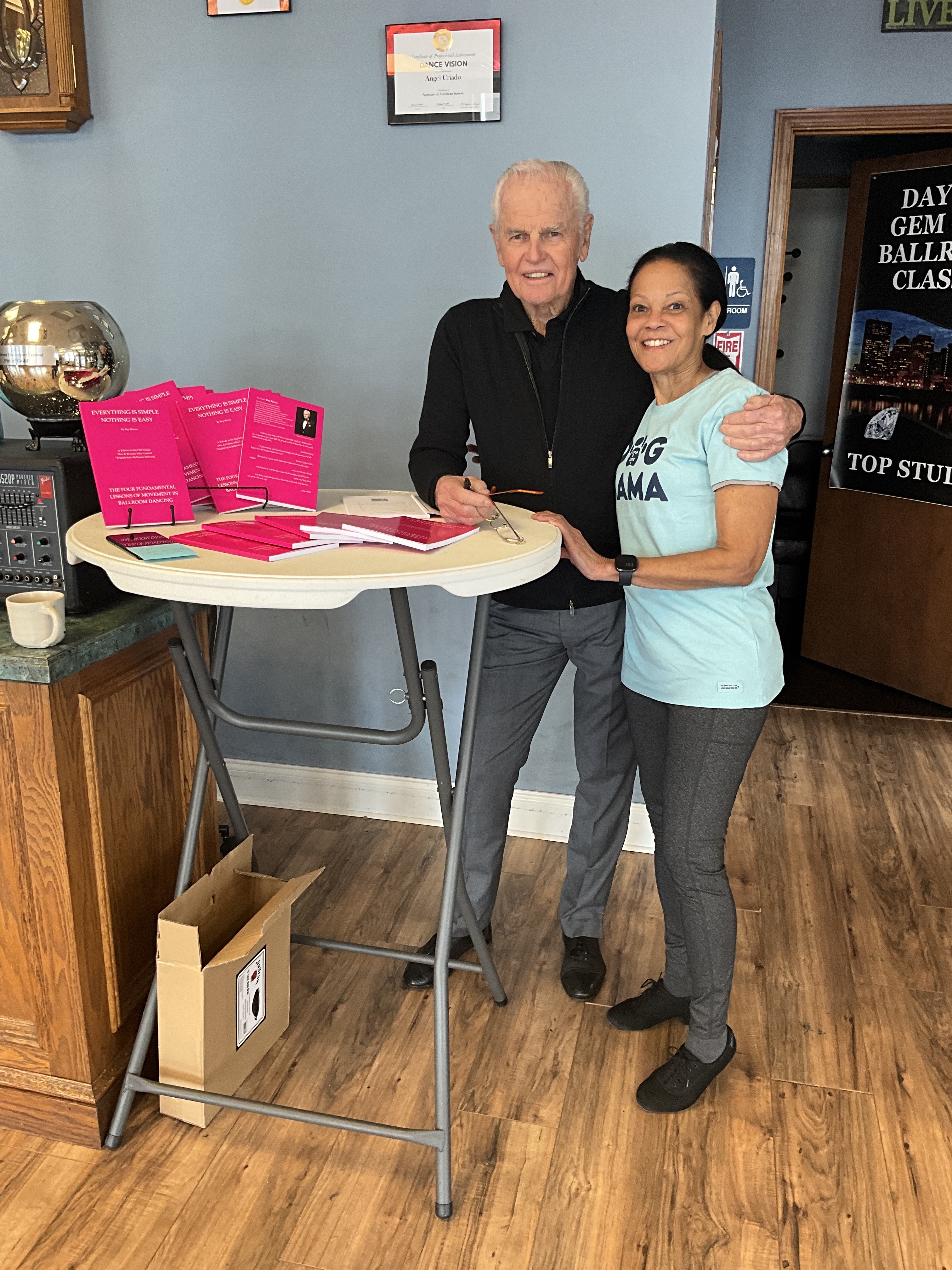
Ray Rivers with student presenting his classic movement text.
What Ongoing Work Actually Develops
When the underlying mechanics are clean, complex material becomes easier to absorb and connection stops requiring constant mental management.
Own Your Own Balance
Establish posture, axis, and core stability so complete that you never rely on your partner to keep you standing or moving.
Clear Body Language
Refine subtle weight shifts and leg action so leading and following happen cleanly without pulling, forcing, or guessing.
Real-Floor Adaptability
Maintain posture, poise, and control through sudden tempo changes, packed rooms, new partners, or performance pressure.
Independent Growth
Build the physical literacy needed to keep refining your own dancing, making competitive or showcase work genuinely coherent instead of just decorative.
Real Dancers. Real Stories.
“You’re able to find the crack in the wall I’m hitting and get me through it, mentally and physically. I am able to start seeing a glimmer of what’s on the other side.”
— M.T.
“You show me how body mechanics make the look of dance. Body physics create the look of a dance. How you can take apart things and make a good dancer out of a total klutz.”
— C.H.
“You’re very technically proficient. On our 1st lesson, I realized you knew what you were talking about and wanted to take lessons with you.”
— J.H.
Real Progress. Zero Games.
No Artificial Packages
This work is for people who are ready to stop treating "more material" as the solution. You do not need to be competitive or advanced already—just willing to examine how you move.
We never push artificial contracts or pressure you to perform choreography you haven't earned the mechanics for.
Clear Diagnostic Entry
We start with a straightforward diagnostic process: identifying what is working, pinpointing where friction lives, and mapping out the next real stage of development.
Our Commitment: High-integrity private instruction that gives you complete physical clarity, freedom, and movement ownership.
Resolve Your Foundation
Ready to stop adding steps and start mastering how you actually move?
We will evaluate your balance, weight, and connection, then decide together what ongoing work makes sense.
Begin Your Private Training